
杭州电子科技大学 自动化学院
AI钱塘论坛(第60期)
主题:Learning and Probabilistic Reasoning for Target Tracking
报告人:Ihsan Ullah副教授,COMSATS University Islamabad, Abbottabad Campus, Pakistan.
时间:2026年11月20日上午10:00
地点:科技馆815
主持人:石义芳
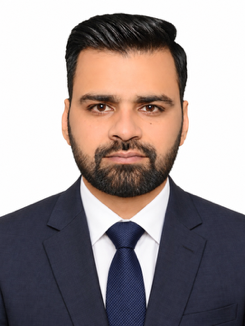
Dr. Ihsan Ullah is an Associate Professor of Electrical Engineering at COMSATS University Islamabad, Abbottabad Campus. He earned his PhD in Electronic Systems Engineering from Hanyang University, South Korea in 2015 and previously held an associate professorship at the Heriot-Watt campus at Zhubanov University in Kazakhstan. His research encompasses multisensor fusion, Bayesian estimation, target tracking, navigation, and machine learning for Industry 4.0, with over 30 scholarly publications in these and related fields. He received the Best Young Researcher Award in 2020 and served as an IEEE Branch Counselor (2016–2024). He has participated in research projects funded by South Korean government and international collaborations with McMaster University researchers.
报告题目及摘要:How Learned Evidence Shapes Bayesian Decisions:How can machine learning help a tracker decide where an object is, which observations belong to it, and whether it is still present? This talk examines how learned features and scores enter Bayesian tracking, from ranking candidate measurements to updating the probability that a track exists. A central question is how to interpret evidence when the tracker’s own prediction determines where it looks. That feedback can help recover a faint target after a missed detection, but it can also reinforce a false track. Worked examples, simulations, and recorded footage illustrate how these choices affect tracking accuracy, continuity, and false-track persistence.