
时间:2026年4月22日15:00-17:00
地点:二教南228会议室
主题1:Remote State Estimation Over Hidden Markov Channels: Measurement Compression and Channel-State-Dependent Packet Loss
王子栋教授
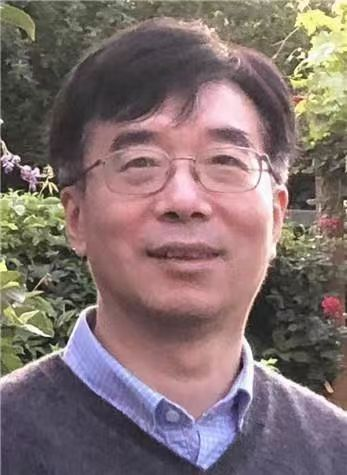 现任英国伦敦Brunel University讲席教授,欧洲科学院院士,欧洲科学与艺术院院士,IEEE Fellow,International Journal of Systems Science主编,Neurocomputing主编。多年来从事控制理论、机器学习、生物信息学等方面研究,在SCI刊物上发表国际论文六百余篇。现任或曾任十二种国际刊物的主编、副编辑或编委。曾任旅英华人自动化及计算机协会主席、东华大学长江学者讲座教授、清华大学国家级专家。
报告摘要:This talk addresses the challenges of remote state estimation with measurement compression and packet loss in a hidden Markov channel. The sensor measurements are compressed to reduce communication load and transmitted over a lossy channel, where packet loss depends on the channel state, which is partially observed. We propose an estimation framework that integrates measurement compression, channel-state-dependent packet loss, and decompression error. Using conditional expectation and Lyapunov-based techniques, we derive conditions for mean-square boundedness of the estimation error. An optimization strategy is introduced to minimize the error bound, improving accuracy. Simulations show how compression quality and channel-state observation impact performance.
主题2:Distributed Optimization, Learning and AI for Power and Energy Systems
丁正桃教授
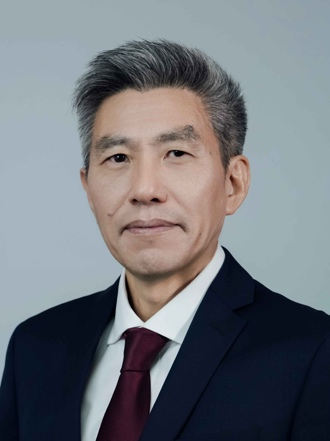
英国曼彻斯特大学教授,IEEE Fellow,英国国家数据科学与人工智能研究院——艾伦·图灵研究院会士。本科毕业于清华大学,在英国曼彻斯特大学取得硕士和博士学位。在新加坡工作十年后,返回英国曼彻斯特大学任教,后来担任电力电子工程系控制系统教授;先后担任中英联合控制实验室主任,控制与机器人研究室主任,以及控制,机器人与通讯分部主任。已出版专著5部,主编出版爱思唯尔《系统与控制工程百科全书》,发表学术论文400余篇。长期从事控制理论、人工智能以及新能源系统的科研、教学和相关行政事务,其主要研究方向包括分布优化及控制、人工智能算法、网络连接动态系统的协同控制、非线性自适应控制理论,新能源系统的控制与优化等。最近,在华电电科院开展新能源综合优化应用以及沙戈荒新能源大基地等相关研究。
丁正桃教授现任《无人机与自动驾驶车辆》主编、《电子学》控制系统领域首席编辑、《前沿》系列期刊非线性控制领域首席编辑,同时担任《科学报告》《控制理论与技术》《无人系统》等十余本期刊编委。他是IEEE非线性系统与控制技术委员会、IEEE智能控制技术委员会、IFAC自适应与学习系统技术委员会委员以及中国自动化协会控制理论专委会委员。
报告摘要:There are many challenges and opportunities in areas such as net zero, internet of things, big data, machine learning, and smart grid, particularly concerning distributed learning, optimization, decision-making, and control. New energy resources are distributed in nature, and there are demands in distributed control and resource optimization for energy and power systems. Advances in distributed networks along with the development of complex and large-scale subsystems have significantly incentivized coordination and cooperation over multi-agent systems. Acknowledging the role of network communication in the decision-making, many distributed algorithms have been developed for distributed machine learning, optimization, and differential games, where certain control perspectives, such as consensus, adaptation, and time-varying topologies or parameters, are intrinsically aligned. Motivated by the interplay among optimization, control and learning, a revisit of typical control methods may offer deeper insights into how these algorithms can be refined in terms of their design and convergence. Recent years the world witnessed magnificent success of AI, in particular, NLP. How to make AI work for power and energy systems to better achieve neat zero has attacked huge attention in related fields. This talk will cover recent activities carried out by the speaker’s group in those related areas, and the experiences that speaker gained from the industry.